
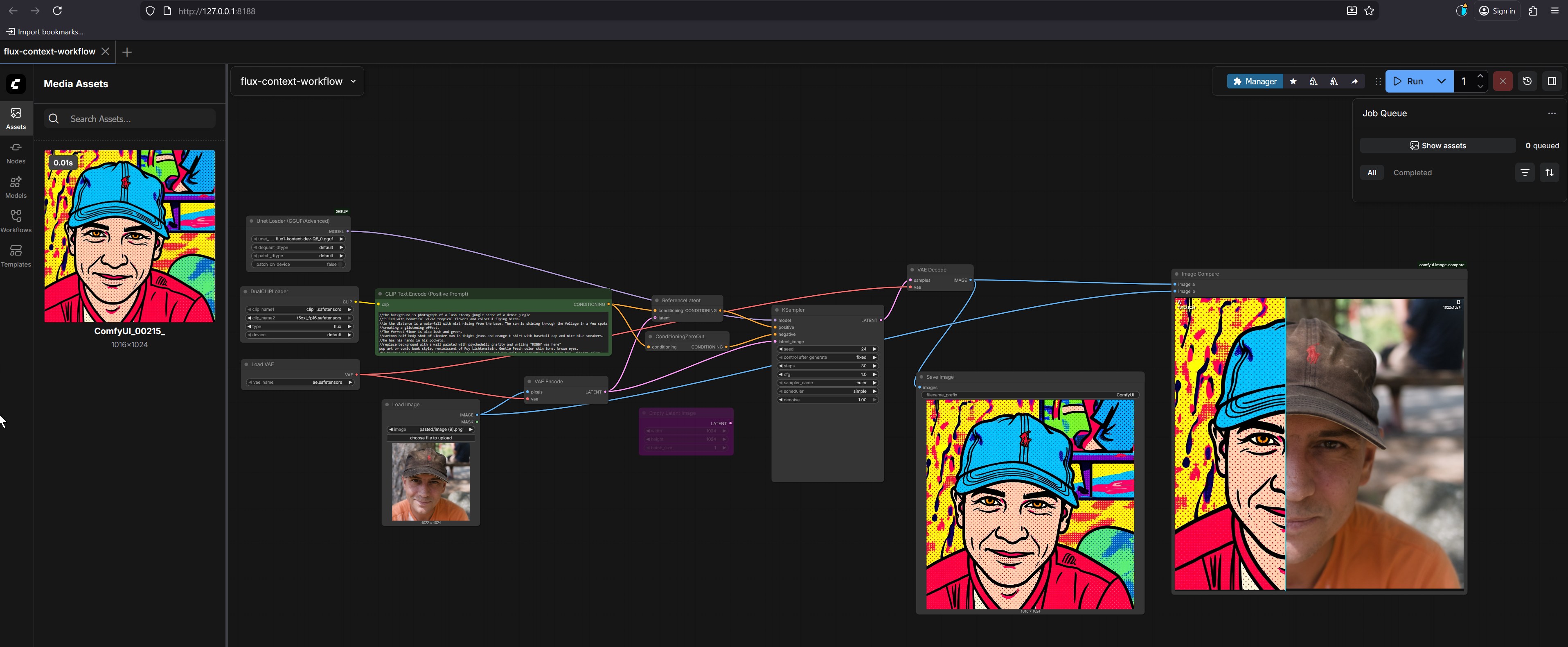
As AI image generation tools become increasingly accessible, understanding the techniques and best practices for creating high-quality results is essential for both beginners and experienced users. Drawing from my experience with tools like ComfyUI and traditional 3D artistry with Blender, I’ll share insights on how to maximize the potential of AI image generation while maintaining artistic integrity.
Understanding the Foundation
Before diving into specific techniques, it’s important to understand what AI image generation actually does. These systems are trained on vast datasets of images and learn to associate text descriptions (prompts) with visual elements. When you input a prompt, the AI doesn’t “understand” in the human sense but rather statistically predicts which visual elements are most likely to match your description.
The Importance of Quality Training
Just as with any skill, the quality of your results depends heavily on your understanding of the underlying technology. Spend time experimenting with different models, learning how they respond to various prompts, and understanding their strengths and limitations. This foundational knowledge will inform all your future work with AI tools.
Prompt Engineering: The Art of Description
Effective prompt engineering is crucial for achieving desired results. A well-crafted prompt can make the difference between a generic image and one that precisely matches your vision.
Structure and Specificity
Start with a clear, specific description of your main subject. Instead of “a cat,” try “a fluffy orange tabby cat sitting on a windowsill during golden hour lighting.” Add details about style, mood, and context to guide the AI toward your vision.
Example:
Poor prompt: “A person”
Better prompt: “A 30-year-old woman with shoulder-length brown hair wearing a blue dress, standing in a sunlit garden with cherry blossoms, photorealistic style, soft lighting”
Iterative Refinement
Rarely will your first prompt produce perfect results. Instead of starting over, make small adjustments to specific elements. If the lighting isn’t right, add terms like “studio lighting” or “dramatic shadows.” If the style isn’t what you want, specify “photorealistic,” “painterly,” or “digital art.”
Example:
Original prompt: “A futuristic cityscape”
First iteration: “Futuristic cityscape at night with neon lights, cyberpunk style”
Second iteration: “Futuristic cityscape at night with neon lights, cyberpunk style, detailed buildings, 8K resolution”
Third iteration: “Futuristic cityscape at night with neon lights, cyberpunk style, detailed buildings, 8K resolution, cinematic composition”
Using Negative Prompts
Negative prompts tell the AI what you don’t want in your image. This can be particularly useful for avoiding common artifacts or unwanted elements. For example, adding “blurry, low quality, distorted faces” to your negative prompt can significantly improve result quality.
Example:
Prompt: “A majestic lion”
Negative prompt: “blurry, low quality, distorted faces, deformed features, extra limbs”
Result: More detailed and realistic lion image with fewer artifacts
Technical Considerations
Understanding the technical parameters of AI image generation can help you achieve more consistent, higher-quality results.
Sampling Steps and CFG Scale
The number of sampling steps affects how thoroughly the AI refines your image. More steps generally produce better results, but with diminishing returns after a certain point (typically 20-50 steps for most models).
CFG (Classifier-Free Guidance) scale controls how closely the AI adheres to your prompt. Lower values (5-10) produce more creative interpretations, while higher values (10-20) stick more closely to your description but may reduce quality if set too high.
Example:
For photorealistic portraits: 40 sampling steps, CFG scale 7-10
For artistic/creative work: 30 sampling steps, CFG scale 12-15
For highly detailed scenes: 50+ sampling steps, CFG scale 8-12
Resolution and Aspect Ratios
Different models perform best at specific resolutions. SDXL models, for example, were trained on square images and may produce better results at 1024x1024. Experiment with different aspect ratios to find what works best for your subject matter.
Example:
Character portraits: 512x768 or 768x512 (portrait orientation)
Landscape scenes: 1024x576 or 1280x720 (wider aspect ratios)
Square compositions: 1024x1024 for SDXL models
Combining AI with Traditional Skills
One of the most powerful approaches is combining AI-generated elements with traditional artistic skills. My experience with Blender has taught me that AI tools are most effective when used as part of a broader creative pipeline rather than as standalone solutions.
Enhancing AI Results with Post-Processing
AI-generated images rarely come out perfect. Using tools like Photoshop, GIMP, or even Blender’s compositor can help refine lighting, adjust colors, or add elements that the AI missed. This hybrid approach often produces results that surpass what either method could achieve alone.
Example:
Before post-processing: AI-generated landscape with flat lighting and unrealistic colors
After post-processing: Using GIMP to enhance contrast, adjust saturation, add realistic shadows, and refine textures
Result: More cinematic and professional-looking final image
Using AI for Concept Development
Rather than relying on AI for final images, consider using it for rapid concept development. Generate multiple variations of a scene or character to explore different directions quickly, then develop your favorite concepts further using traditional methods.
Example:
Concept exploration: Generate 5 different versions of a character design with varying hair styles, clothing, and expressions
Selection process: Choose the best elements from each iteration to create a final concept
Traditional refinement: Use the selected AI-generated base to create detailed sketches or digital paintings
Workflow Optimization
Developing efficient workflows can save significant time and improve consistency in your results.
Template Systems
Create templates for common image types you generate. For example, if you frequently create character portraits, develop a template workflow with your preferred settings, then customize it for each specific subject.
Example:
Portrait template:
- Resolution: 768x1024
- Sampling steps: 40
- CFG scale: 8
- Style: photorealistic
- Negative prompt: “blurry, low quality, deformed features”
Landscape template:
- Resolution: 1280x720
- Sampling steps: 50
- CFG scale: 7
- Style: cinematic
- Negative prompt: “distorted perspective, low resolution”
Batch Processing
When generating multiple images with similar parameters, set up batch processing to generate several variations simultaneously. This is particularly useful for exploring different artistic directions or creating consistent sets of images.
Example:
Batch generation: Create 10 variations of a “fantasy forest” scene with different lighting conditions (morning, noon, evening)
Settings: Same resolution and model, varying only the prompt keywords for time of day
Result: Quick exploration of multiple artistic directions in one session
Model Selection and Management
Different AI models excel at different tasks. Understanding which models work best for your specific needs can significantly improve your results.
Specialized Models
Some models are trained specifically for certain tasks like architectural visualization, character design, or landscape generation. Experiment with specialized models for your specific use cases rather than relying on general-purpose models.
Example:
Architecture: Use “Stable Diffusion Architecture” model for building designs
Character Design: Use “Character.ai” model for detailed human figures
Landscape: Use “Landscape Pro” model for nature scenes
Model Blending
Advanced techniques involve blending outputs from multiple models or using one model for initial generation and another for upscaling or refinement. This requires more technical knowledge but can produce unique results.
Example:
Initial generation: Use SDXL for detailed base image
Upscaling: Use Real-ESRGAN to enhance resolution
Refinement: Use Inpainting model to fix specific areas
Result: High-resolution, highly detailed image with improved quality
Ethical Considerations and Best Practices
As AI image generation becomes more prevalent, it’s important to consider the ethical implications of your work.
Attribution and Transparency
When using AI-generated elements in professional work, consider whether and how to attribute the technology used. This is particularly important in commercial contexts where transparency with clients and audiences is essential.
Copyright and Licensing
Understand the licensing terms of models you use and the legal implications of AI-generated content. While current legal frameworks are still evolving, being informed about these issues can help you avoid potential problems.
Quality Control and Evaluation
Developing a systematic approach to evaluating your results can help you identify areas for improvement and track your progress.
Consistent Evaluation Criteria
Establish criteria for evaluating your generated images, such as technical quality, artistic merit, and how well they match your original vision. Regular evaluation helps identify patterns in what works and what doesn’t.
Learning from Results
Keep records of your experiments, noting which prompts, settings, and techniques produced the best results. This knowledge base becomes invaluable for future projects.
Advanced Techniques
As you become more comfortable with basic AI image generation, several advanced techniques can further enhance your results.
Image-to-Image Generation
Using existing images as a starting point can guide the AI toward specific compositions, color palettes, or artistic styles. This technique is particularly useful for modifying existing artwork or creating variations on a theme.
Example:
Original image: A simple sketch of a fantasy castle
Process: Use image-to-image to add textures, lighting effects, and detailed architecture
Result: Enhanced digital painting with rich details and realistic textures
ControlNet and Pose Guidance
Tools like ControlNet allow you to guide image generation using specific structural elements like poses, depth maps, or edge detection. This gives you more precise control over the composition and structure of generated images.
Example:
Input: A reference photo of a person in a specific pose
Process: Use ControlNet with pose estimation to generate a new character maintaining the same pose
Result: Character that matches the reference pose exactly while allowing for style variations
Integrating with Creative Pipelines
For creative professionals, integrating AI tools into existing workflows requires careful consideration of how they complement rather than replace traditional skills.
Complementary Strengths
AI excels at generating complex textures, backgrounds, and concept art quickly, while traditional artistic skills are better for precise control, storytelling elements, and cohesive artistic vision. Understanding these complementary strengths helps you use each tool where it’s most effective.
Example:
AI-generated base: Create a detailed fantasy landscape with AI
Traditional refinement: Add hand-drawn character elements and specific details that require human touch
Final result: A cohesive artwork combining the best of both approaches
Maintaining Artistic Voice
While AI can generate impressive results, maintaining your unique artistic voice requires intentional curation and refinement of AI outputs. Use AI as a tool to enhance your vision rather than replace it.
Example:
Personal style: Always use warm color palettes in AI-generated work
Consistent elements: Include specific visual motifs that appear across all pieces
Conclusion
AI image generation represents a powerful new tool for creative professionals, but mastering it requires both technical knowledge and artistic sensibility. By combining prompt engineering skills with an understanding of the underlying technology and integrating AI tools into broader creative workflows, you can achieve results that neither approach could produce alone.
The key is to approach AI as a collaborative tool rather than a replacement for traditional skills. My experience with both technical systems administration and 3D artistry has shown me that the most compelling results come from understanding how to leverage each tool’s strengths while compensating for its limitations.
As AI technology continues to evolve, staying informed about new techniques and best practices will be essential for anyone serious about creative work. The principles outlined here provide a foundation for developing your own approach to AI image generation that fits your specific needs and artistic goals.
Related Posts:
- Getting Started with ComfyUI: A Powerful Node-Based Interface for Stable Diffusion
- Blender 3D: From Concept to Final Render
If you found this guide helpful, I’d be very grateful if you’d help it spread by sharing it.